
When Climbing to the Peak Leaves Only Despair | A Plan to Search for the "Meaning of Existence"
In the noisy era of AI, reclaiming the quiet "me"
Introduction
Recently, my anxiety about life has increased, not just because of the complicated schoolwork and work-related matters.
This has led me to decide to整理一下思緒 and record my thoughts on the “Youth Billion Dream Project,” fearing that I might forget about it after a few months.
Originally, Gemini gave me this title:
“When Climbing to the Peak Only Leaves Despair: A Confession from a National Taiwan University Student, and a Billion Dream Project in Search of the ‘Reason to Live‘“
I made a slight modification because I do not want to be labeled as a “National Taiwan University student.” While this might positively affect the article’s exposure, it somewhat deviates from the theme I want to convey.
My life has seemed smooth all along, from attending my first-choice high school to easily getting into a prestigious university.
But as someone seen as a winner in life by others, I never truly consider myself “successful,” and I no longer wish to live for a long time.
I want to write down this thought and even propose a plan. I understand that such a plan or research writing may seem far-fetched, but I still want to give it a try.
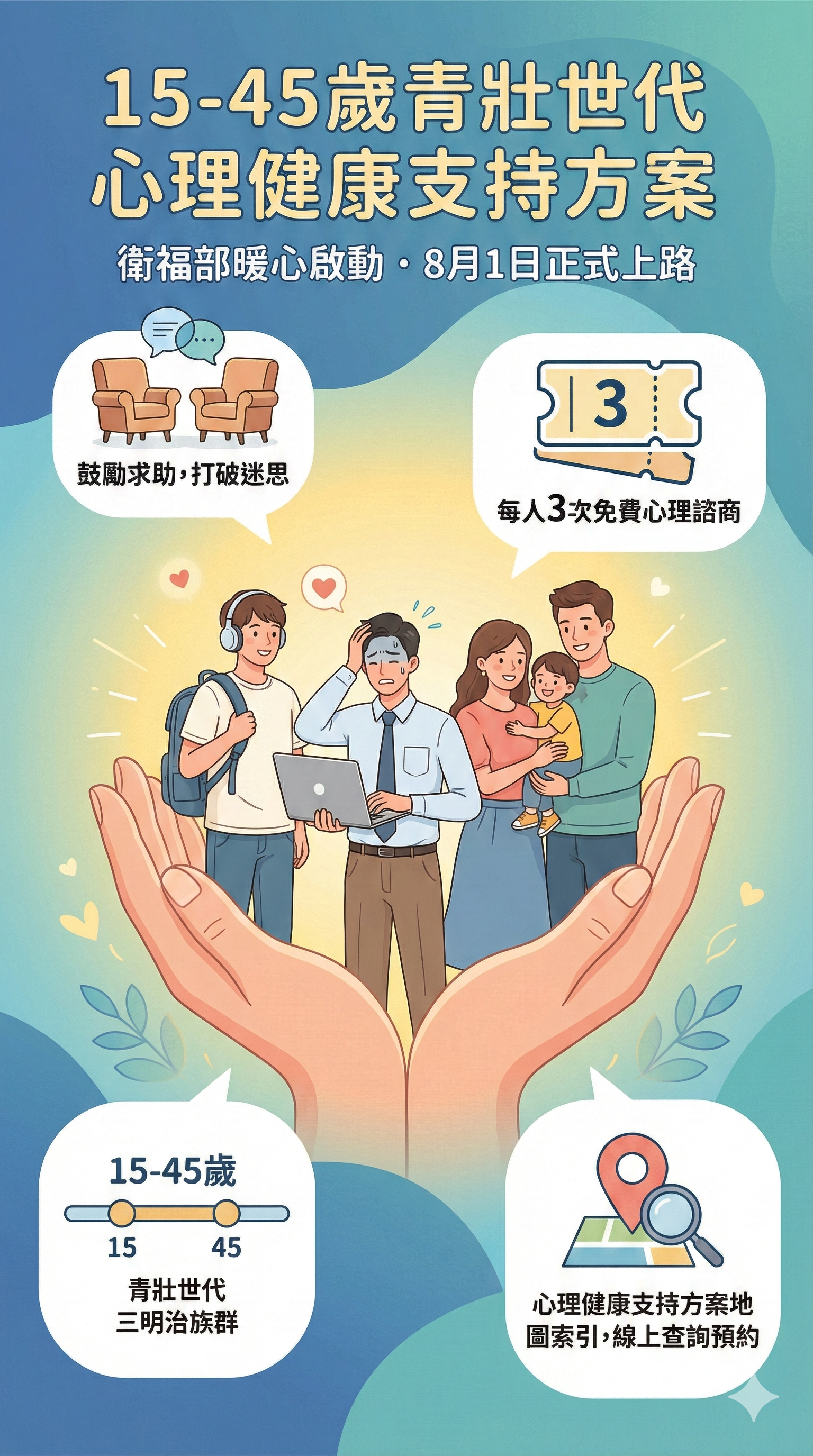
I have been emotionally unstable since childhood, and it wasn’t until college that I was officially diagnosed with “depression.” The government has actually invested heavily in youth mental health. Whether it’s counseling service subsidies or various reporting mechanisms, unfortunately, these measures have been of no use to me.
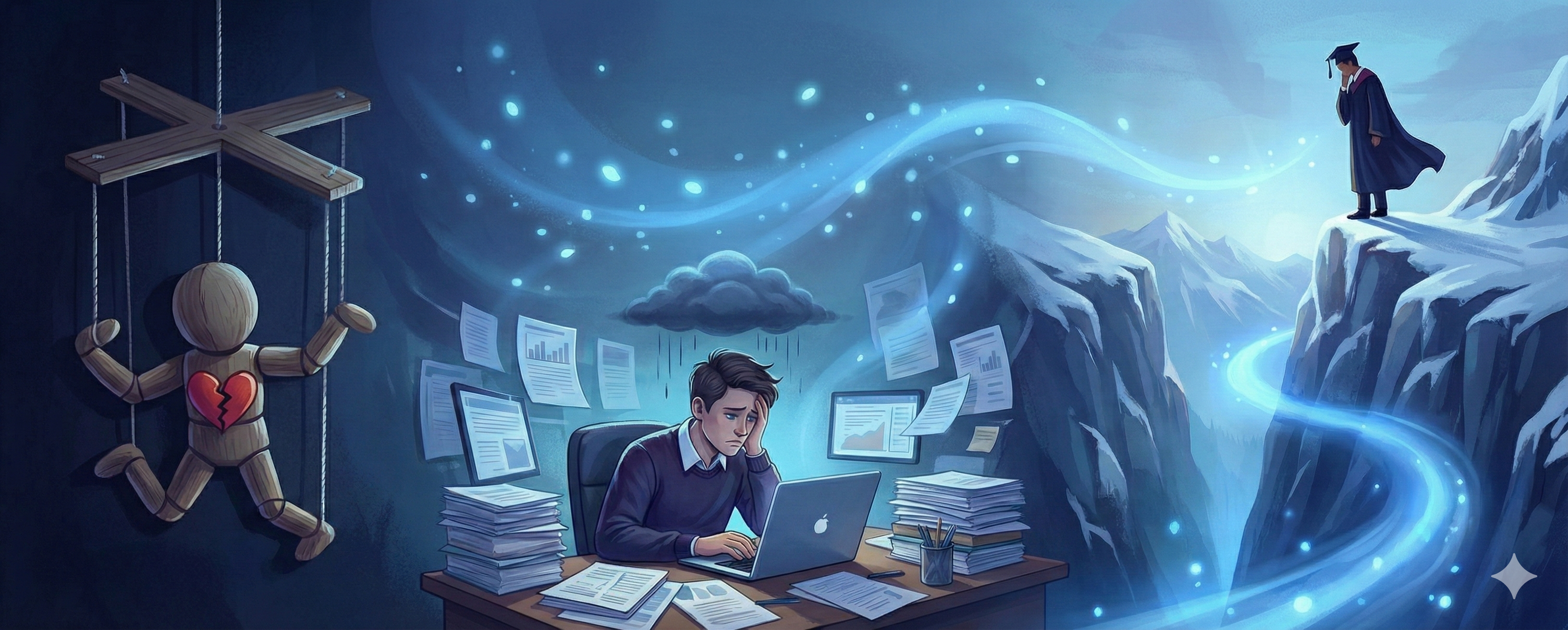
Looking at the outstanding classmates around me, I always feel that everyone tacitly hides their breakdowns deep inside. No matter how bright the halo of prestigious schools shines, it cannot illuminate the frequent news of falls, countless nights of desperate cramming, and the expectations that the outside world naturally projects onto us. Everyone hides their wounds perfectly, as if those cracks never happened as long as they are not spoken. And this is not a rare phenomenon—on social media, the undercurrents of repression and exhaustion have always been present.
Recently, with the rapid development of AI, my existing anxiety has been pushed to the extreme by this new kind of anxiety. “If I can’t produce something better than AI, do I still have value in living?” This fear of being replaced makes me feel utterly “useless.”
Although living can feel powerless, I do not want to disappear silently. Therefore, I have decided to give myself one last chance to find my “reason to live.”
This is not just a plan; it is a “prescription for survival” that I am giving myself. (Although I’m not a doctor XD)
I. Core Issue: Why Do We Feel Despair About the Future?
I do not believe this is just a personal pathological issue; it is a structural social symptom.
1. The Fear of Becoming a “Loss-Making Investment”
Under Taiwan’s education system, I believe I am not the only one who sees myself as a “investment target” for my parents. The expectations from family and society make us afraid to fail, and we even lack the right to be sick.
Recently, I saw a post: a student had just left the emergency room, and the doctor suggested hospitalization, but he refused because he had a “special selection interview” a few days later.
This is our current situation—what is scarier than death is falling behind. A large part of the reason I am still alive is to prevent my parents from feeling like their investment has failed, to “live until the day responsibilities are fulfilled.”
Everyone’s definition of “fulfilling responsibilities” may vary greatly. For me, my responsibility to survive disappeared the moment my mother died, which is when I, as a “product,” could completely vanish from the market. In the past, I found the phrase “as long as you are alive, there is hope” ironic, and I felt that living was about bringing hope to others. When that important other disappears, do I instantly lose my value?
2. The “Collective Uselessness” in the AI Era
Recently, the issue of salaries in Taiwan has been slightly discussed. As an entrepreneur, if I can save money using artificial intelligence, why should I still hire people?
As an employee, is it easy to develop doubts about whether my job can be easily replaced?
Since childhood, the environment seems to constantly convey that people need to “produce results.” But when AI can do things faster and better than us, our value of existence collapses in an instant. We urgently need to know: in an era where humans no longer need to be “tools,” how should we redefine “human value”?
3. The Deadly Cycle of the Survival Game
In addition to psychological and technological anxieties, the despair of the real economy is even more striking. In this generation, even if we have top-notch education, working our whole lives may not even allow us to buy a “home” to settle down; wanting a stable place to live means being chased by huge mortgages.
We are trapped in an absurd cycle: “Going to work every day is for working, working is for living, but living is just to continue working.” When survival becomes merely about repaying debts and maintaining physical existence, the future becomes a blank slate.
II. My Dream Proposal: Go to the Happiest Country to Find the Cure for Sadness
I do not plan to go abroad to “enhance competitiveness”; I plan to learn “how to accept failure” and “how to rest.” My project targets Europe (Finland and the UK).
Proposal Name (Tentative): “When AI Replaces Our ‘Usefulness’: Finding ‘Useless Utility’ in Youth Psychological Resilience Engineering from European Experiences”
Research Path A&B
A: Finland — Failure, Happiness, and Survival
Finland was once seen as a country with high suicide rates, but it has now become the happiest country in the world. I want to understand how they went through this transformation.
-
Day for Failure
Why would a country celebrate “messing things up”?
For Asian students who are used to pursuing perfect scores, could this alleviate anxiety? -
Educational Scene
How do they cultivate empathy and soft skills that AI cannot replace? -
Systemic Safety Nets
Through “psychological autopsy” and social policies, how have they managed to halve the suicide rate?
B: UK — Prescriptions Beyond Medicine
The UK’s mental health strategy is not limited to medical treatment but is deeply integrated into community life.
-
Social Prescribing
Depression does not necessarily rely solely on medication.
I want to observe how “Link Workers” guide young people out of loneliness through activities like art and gardening. -
Peer Support
In high-pressure academic environments like Oxford and Cambridge, how do they assist students in facing psychological crises under an elite system?
【All are preliminary ideas and still have significant variables】
III. Expected Output Tools: A Survival Guide for the Anxious Generation
I know that people like me will feel anxious as long as they are “not doing anything.” So I do not want to propose suggestions like “everyone should meditate,” which are impractical. I want to create a set of concrete tools:
1. 【Disguised Rest as Tasks】(Productive Rest)
A “busy brain” checklist designed for high-functioning anxious individuals. For example, the weaving of Finns, the Dutch concept of Niksen (the art of doing nothing). This is a mechanism to deceive the brain, allowing us to gain genuine neural relaxation while feeling a sense of “doing something.”
2. 【Future Navigation Map: Option B】
For students who feel “despair about the future,” create a report. Inform everyone that besides the mainstream path of “studying → working → buying a house → dying,” there are alternative paths in the world where one can “live well.”
IV. Preliminary Experiment: Half a Year in Hawaii (Pilot Study)
Before formally applying for the Billion Dream Project, I will go to the University of Hawaii for a half-year exchange in early 2026.
This is not studying abroad; it is a Gap Year defined by myself.
I will make good use of the Medical Reduced Course Load (RCL) mechanism to legally reduce credits, allowing me more energy to invest in self-exploration plans.
My Tasks for Myself in Hawaii:
V. Conclusion
Writing down this plan, I still feel lost and still sometimes feel like I want to die in the middle of the night.
But I tell myself that this plan does not have to be for “success.”
This is a negotiation with this meritocratic society, a last struggle for me not to become a “loss-making investment,” and a journey in which I attempt to find an exit for the countless “talented yet hollow” souls like me in Taiwan.
If there comes a day when I can return with answers, I hope to tell everyone:
“You don’t have to try so hard to survive.”